Showing posts with label Spirituality. Show all posts

Thursday, January 13, 2011

Songs for the Missing -- Steward O'Nan

Songs for the MissingSongs for the Missing by Stewart O'Nan

My rating: 3 of 5 stars


Overall I enjoyed this story--though given the subject "enjoy" doesn't quite seem to be the right word. The author's writing style is a little difficult to follow at times. Specifically, in some places it was tough figuring out who was the focus of that sentence or paragraph. One thing done really well is the great amount of description in this novel. O'Nan also created fully developed characters that you wanted to get to know. One last note: The Killers are from Las Vegas. I appreciate when an author does his or her homework on pop culture references. This story would have benefitted from some fact-checking.


View all my reviews

Share/Bookmark

Wednesday, April 8, 2009

A Buddhist Service at the Rime Tibetan Buddhist Center 3

Part 3 of 3

The most moving portion of the service was when the sangha chanted “Om Vahrasattva hum” one hundred eight times in rapid succession. The chanting began after everyone spoke the Vajrasattva mantra and we noticed the members discreetly removing mala beads from their pockets or the seats beside them. The chanting began quickly and, at first, the sangha was out of step but by the tenth repetition suddenly the entire sangha fell perfectly in tune with one another leaving the room ringing with their combined voices. I was moved as I heard and felt the unity grow and surround the shrine room.

Another ten minute meditation was followed by a special guest speaker, Dr. Terry Brody. Dr. Brody spoke about the way the Buddhist handles times of crisis and how to learn from those times of struggle. Personally, this was a welcome lesson after having a particularly difficult start to this year. I listened to her speak saying the things that I knew to be true—that bad times do not define us, that we should not let ourselves become paralyzed with inaction but fight against the urge to close off to the world and find the middle path. She recited some of her favorite quotes from the Dalai Lama and other spiritual leaders and the service concluded with a prayer to the Dalai Lama for a long life and a dedication of merit to the sangha. The horns, drums and cymbals began again as the preceptors extinguished the candles, bowed once again to the Buddha and exited in the same manner as their entrance.


While the Tibetan Buddhist service was a lot to take in, it left us an overall sense of peace and contentment. Our only disappointment was Lama Stanford was in India so we were unable to meet him in person and the center preceptor filling in for him skipped the guided meditation. We were hoping for the guided meditation to help us understand meditation through his teaching. My husband and I walked from the shrine room to the gift shop to take a brief look at the ritual items and books. Our children quickly found us in the gift shop and upon greeting us confirmed they enjoyed the dharma school as much as we enjoyed the meditation service by asking, “Can we come back next Sunday?” They excitedly explained they got to sit and meditate. They did yoga poses and walked like a crab. They were taught about the offering bowls and the importance of the offering. We gathered our crew, left a small donation for their time, resources and the experience and left the Rime Center pleasantly surprised by and thankful for our positive and peaceful experience.

Share/Bookmark

A Buddhist Service at the Rime Tibetan Buddhist Center 2


Part 2 of 3

The beginning of the service was announced by a recording of horns, cymbals and drums during which the entire sangha stood, faced the center of the room and bowed. The preceptors walked in a single file line down the middle of the shrine. The center preceptor lit candles and incense as an offering to the Buddha and all three bowed in respect then everyone sat down. Each precept sat on a zafu and zabuton, two on the sides facing the sangha and the third, the center preceptor, sat in the middle slightly elevated. He then rang the singing bowl four times to indicate the beginning of the service.

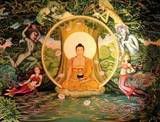
Members immediately fell into a meditation the program noted was a brief stabilizing meditation. A few short minutes passed and the center preceptor rang the singing bowl to note the start of the refuge vows. The refuge vow is spoken three times by the entire sangha as a motivation to open their hearts to enlightenment. Quickly following the refuge vow were the Four Immeasurables, blessings for all beings to be free from suffering and filled with happiness, the sangha spoke three times followed by another ring of the singing bowl and a ten minute meditation session. The meditation session was ended by a ring of the singing bowl and the members of the sangha fell into the supplication to Buddha. We were instructed to visualize a gold Buddha sitting on an open lotus. The visualization ended with Buddha radiating light and dissolving into the light and becoming one with us. The supplication asked that we are shown the path to enlightenment through compassion and virtuous action true to the teaching of the Blessed One.

The next portions of the service happened quickly as the well-practiced sangha fell swiftly into unison. The ringing of the singing bowl began the Seven Limbed Prayer prostrating offering, confession, rejoicing in the good, asking the Buddha to remain, and beseeching Buddha’s to teach others. The Seven Limb Prayers were spoken by everyone one time. The Mandala Offering, also spoken by everyone, is an offering to all of the lineage of Buddhas and bodhisattvas and all of the lamas and deities and enlightened beings in all ten directions and in all three times. My husband and I struggled to keep up with the chants while trying to discreetly read the pamphlet with the text of the chants. We found quickly that we would read the explanations later so we could follow along with the service.

Another ring of the singing bowl, the preceptors began the supplication to Manjushri. The pamphlet from the center credits Manjushri as one of the most important figures in Tibetan Buddhism as the bodhisattva of wisdom. The preceptors continue with the supplication to Maitreya or the next Buddha. The preceptors moved on with a Supplication to Tara, the Bodhisattva of compassion, which ended with the entire sangha finishing the prayer. A music track began playing and everyone began singing the Tara Mantra, “Om tare tu tare ture soha.” At the song’s conclusion the Dedication of Tara Meditation was spoken by everyone one time and the sangha quickly transitioned to Liberating the Beings of the Six Realms aloud. This led to the Tonglen meditation session where the sangha was to embrace the bad and emit the good. After the ten minute Tonglen meditation session everyone spoke the prayer to Chenrezig and began singing, “Om mani padme hum.”

Part 3 to come...

Share/Bookmark

A Buddhist Service at the Rime Tibetan Buddhist Center

Part 1 of 3


The Rime Buddhist Center and Tibetan Institute of Studies is found in a hundred year old two story church in Kansas City, Missouri. The large red building offers ample room to hold not only the Buddhist service and practice but house dorms for retreats and visiting monks from all over the world. I found myself walking up the steep red stairs Sunday, March 15th at 10:15 in the morning for the 10:30 service with my husband and four children in tow.

When we entered the Rime Center we were first greeted by the sharp, rich smell of patchouli incense then by the friendly smile of a member on the look-out for visitors waiting to answer any questions. From previous conversations with Lama Chuck Stanford, we knew that there was a Sunday dharma school the children were able, and encouraged, to attend. After a brief conversation with the center’s greeter we took the children upstairs, helped them remove their shoes and bid them farewell hearing them instructed to each pick up a zabuton and find a place to sit down.

My husband and I removed our shoes in the foyer and walked down the main hallway that ended at the shrine room. We briefly spoke with a gentleman who was handing out service programs and introduced ourselves. We explained that we were new to the center and if there were any last minute bits of information we should know. He said we were welcome to grab a spot to sit where we were comfortable, either on the hardwood floor on a zabuton with or without the zafu or on one of the chairs that lined the sanctuary. He told us to participate as much, or as little, as we felt comfortable and the program he gave us outlined specific details on what to expect and when. We thanked him and sat down on a zabuton with a zafu near the middle of the sangha to observe both the preceptors and the community.

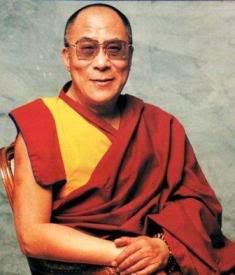
Right away we took in the brilliant red drapes with colorful tapestries decorated with Buddhist iconography. The shrine, situated at the front of the room, held pictures of Tenzin Gyatso, the 14th Dalai Lama in various poses of him in meditation or smiling along with mandalas, statues of Buddha and Tara and colorful photographs of the sangha during many different events. The shrine room ceiling gently fluttered with the multicolored Buddhist prayer flags strung from one side to the other. The seating itself was divided into two sections on the right and left with a center path to the shrine and folding chairs lined the sides and back walls. The shrine room felt serene as each member sat quietly waiting for the preceptors to enter marking the beginning of the service. We noticed the energy shifting as people quieted and began their own personal meditations.

Part 2 to follow...

Share/Bookmark

Monday, March 16, 2009

Read This 3/16

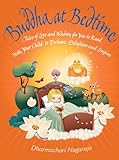
Buddha at Bedtime: Tales of Love and Wisdom for You to Read with Your Child to Enchant, Enlighten and Inspire Buddha at Bedtime: Tales of Love and Wisdom for You to Read with Your Child to Enchant, Enlighten and Inspire by Dharmachari Nagaraja


My review


rating: 5 of 5 stars
This is a wonderful book full of stories that help teach the basic Buddhist principles to children. The short stories are filled with examples of compassion and patience. The author also included basic instructions for teaching children the art of meditation. The artwork throughout is vivid and whimsical.


View all my reviews.

Share/Bookmark